


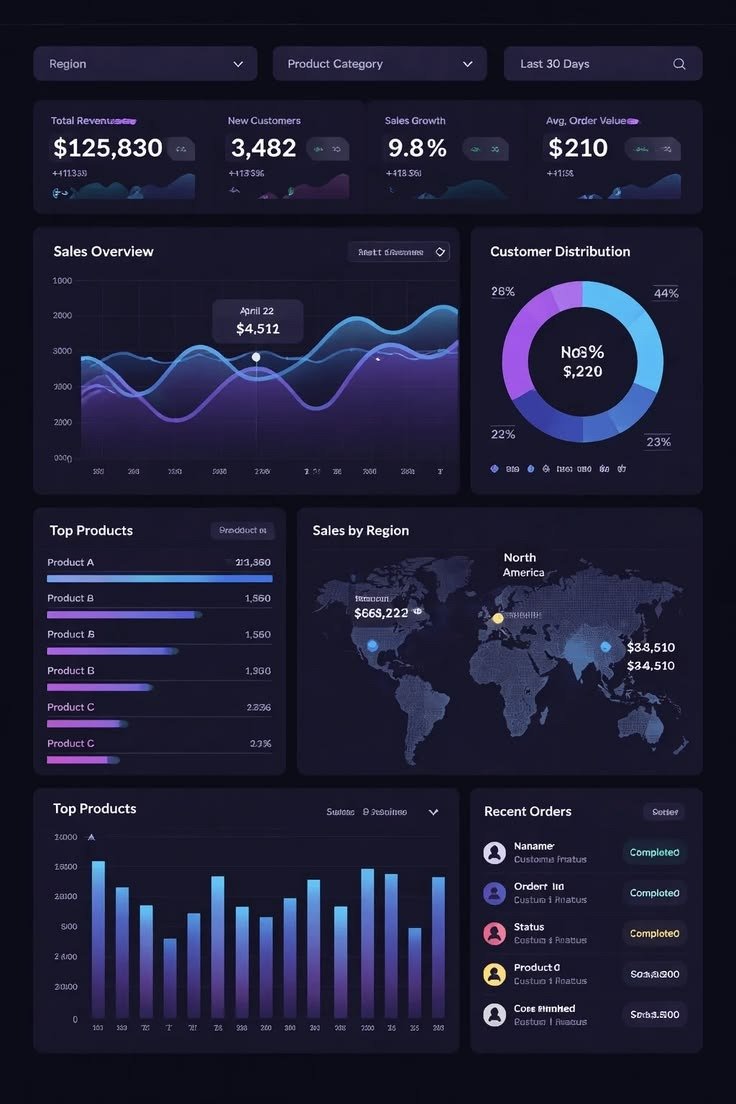
For modern finance teams, an expense dashboard is more than a collection of charts. The right dashboard gives a CFO a clear view of spending, budgets, cash flow, financial performance, and potential problems before they become larger issues.
As businesses grow, spreadsheets alone can become difficult to manage. Finance leaders increasingly look for CFO financial reporting software and analytics tools that can bring financial information together and make it easier to understand.
This guide looks at what to consider when comparing the top expense dashboard platforms for CFOs in 2026 and how businesses can determine which solution best fits their finance operations.
What Is a CFO Expense Dashboard?
A CFO expense dashboard is a centralized financial reporting interface that helps finance leaders monitor business expenses and related financial metrics.
Instead of reviewing multiple spreadsheets and reports, a CFO can use a dashboard to quickly review important information such as:
- Total expenses
- Department spending
- Budget vs. actual expenses
- Operating expenses
- Vendor spending
- Travel and entertainment expenses
- Payroll-related costs
- Cash flow
- Expense trends
- Forecasts
- Key financial ratios
The goal is not simply to display numbers. A useful dashboard should help finance leaders understand what is happening, why it is happening, and what action may be necessary.
Why CFOs Need Better Expense Dashboards
As organizations become more complex, financial data can come from accounting systems, payroll platforms, expense management tools, banks, credit cards, procurement systems, and other business applications.
Without effective reporting, finance teams may spend too much time collecting and reconciling information.
A strong dashboard can help CFOs:
Monitor Spending
Finance leaders can quickly identify where company money is being spent and compare current expenses with previous periods.
Identify Variances
Comparing actual expenses against budgets can reveal unexpected increases and help management investigate the reasons behind them.
Improve Forecasting
Historical spending patterns can provide useful information for forecasting future expenses and financial performance.
Support Better Decisions
A centralized view of financial information can help executives make decisions based on current business data rather than relying solely on delayed reports.
Key Features to Look for in CFO Expense Dashboard Platforms
Not every financial dashboard is designed for the same type of organization. When comparing platforms, CFOs should consider several important capabilities.
1. Real-Time or Frequent Data Updates
A dashboard is most useful when the information is current enough to support timely decisions.
Ask how frequently data is updated and whether information can be synchronized automatically with existing financial systems.
2. Budget vs. Actual Reporting
This is one of the most important functions for expense management.
CFOs should be able to compare planned spending with actual spending and quickly identify significant variances.
3. Department-Level Reporting
A business may need to see expenses by:
- Department
- Location
- Business unit
- Project
- Cost center
- Vendor
- Expense category
Flexible filtering makes it easier to investigate spending patterns.
4. Customizable Dashboards
Different finance leaders have different priorities. A CFO may want a high-level executive dashboard, while a controller may need more detailed transaction-level information.
Customization allows businesses to create dashboards around their specific reporting requirements.
5. Forecasting and Trend Analysis
Historical expense information becomes more valuable when it can be used to identify trends.
Look for tools that allow finance teams to analyze spending over time and incorporate forecasts into management reporting.
6. Integration With Existing Systems
Before choosing a platform, determine whether it can connect with the systems your organization already uses. Common integrations may include:
- Accounting software
- ERP systems
- Payroll systems
- Banking platforms
- Corporate credit cards
- Expense management systems
- Business intelligence tools
Reducing manual data entry can save finance teams significant time.
Comparing the Top Expense Dashboard Platforms for CFOs
There is no single platform that is automatically the best CFO expense dashboard for every organization. Different businesses have different reporting needs, budgets, technology environments, and levels of financial complexity.
When evaluating platforms, consider these categories:
| Evaluation Area | What CFOs Should Consider |
| Expense reporting | Does it provide detailed spending visibility? |
| Budget tracking | Can actual spending be compared with budgets? |
| Forecasting | Can finance teams analyze future spending? |
| Integrations | Does it connect with existing financial systems? |
| Customization | Can dashboards be tailored to different users? |
| Scalability | Can the platform support business growth? |
| Security | Are appropriate access controls available? |
| Reporting | Can executives easily generate financial reports? |
| Usability | Can finance and non-finance users understand the dashboards? |
The best solution is ultimately the one that fits the organization’s financial processes rather than the platform with the longest list of features.
Enterprise CFO Analytics: What Matters Most?
Large organizations typically have more complicated reporting requirements.
Enterprise CFO analytics may need to bring information together across multiple departments, entities, locations, currencies, or business units.
For enterprise finance teams, important capabilities can include:
- Multi-entity reporting
- Role-based access
- Consolidated financial reporting
- Automated data collection
- Advanced filtering
- Forecasting
- Scenario analysis
- Audit trails
- Executive reporting
- Data visualization
Security and governance should also be considered carefully when financial information is being centralized.
How to Choose the Best CFO Expense Dashboard
Before purchasing a platform, start with the business problem rather than the software features.
Ask:
- What information does the CFO currently struggle to access?
- How much time does the finance team spend preparing reports?
- Which expense categories require the most monitoring?
- Which systems need to be connected?
- Who will use the dashboards?
- Does the company need basic reporting or advanced analytics?
Answering these questions can help narrow the options and prevent businesses from paying for capabilities they don’t actually need.
Why Financial Visibility Matters
Expense dashboards are ultimately about visibility.
When CFOs can quickly see spending patterns, budget variances, and financial trends, they can spend less time searching for information and more time using it to guide the organization.
A well-designed dashboard should turn complicated financial data into information that is easy to understand and act upon.
CFO Financial Reporting With Elite Solutions
At Elite Solutions, we understand that finance leaders need more than raw financial data. They need information organized in a way that supports analysis, planning, and decision-making.
Whether your organization is evaluating CFO financial reporting software, improving expense reporting, or looking for better enterprise CFO analytics, the right financial reporting strategy can make a significant difference.
Instead of choosing a platform simply because it is popular, evaluate how well it fits your company’s existing systems, reporting requirements, and long-term financial goals.
Final Thoughts
The market for CFO dashboards and financial analytics continues to evolve in 2026. Businesses have more options than ever for monitoring expenses, analyzing financial performance, and improving reporting.
When comparing the top expense dashboard platforms for CFOs, focus on the features that actually matter to your organization: data integration, reporting accuracy, customization, forecasting, security, scalability, and ease of use.
The best CFO expense dashboard isn’t necessarily the platform with the most features. It’s the one that gives your finance team reliable financial visibility and helps leadership make better decisions.
Elite Solutions — helping businesses turn financial data into clearer reporting and smarter financial decisions.