



All business decisions come with some degree of financial risk. Despite everything the firm is putting in, new technology, increasing the size of its operations, starting a marketing campaign, or hiring more people, the decision makers should know what they will get from their investments. In these cases, one of the most valuable financial metrics that should be considered is ROI.
For example, at Elite Solutions, knowing financial performance is key when it comes to making sound business decisions. After analysis of ROI and other financial metrics, firms can make fruitful decisions that help them to reach their goals.
What Is Return on Investment (ROI)?
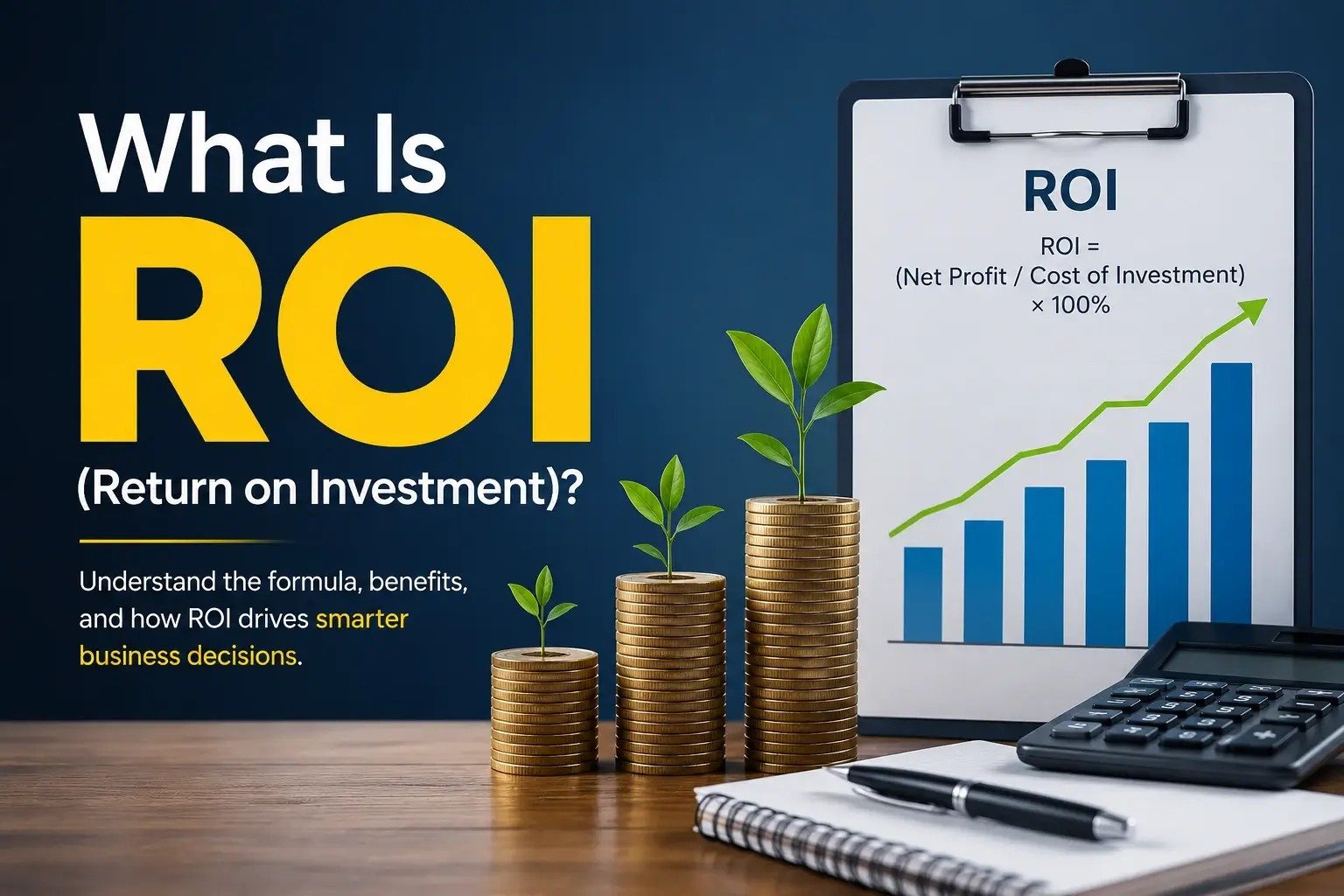
Return on Investment, often referred to as ROI, refers to the amount of financial return earned on investment compared to the investment cost. This means that ROI is one of the easiest ways to determine if an investment has been worthwhile and efficient.
The general equation used to calculate ROI is as follows:
ROI = (Net Profit from Investment ÷ Cost of Investment) x 100
For example, in a situation where a company invests $10,000 in a marketing campaign and makes $15,000 in net profit from the investment, its ROI will be 150%.
This will allow the company owner to measure the performance of the investment using quantifiable results. It is important to remember that ROI should always be analyzed within the given context. The period for which the returns are being generated, risks involved, and projected profitability can greatly affect the decision about the investment’s desirability.
Why Is ROI Important for Financial Decision Making?
1. ROI Assists Business in Efficient Resource Allocation
Every business works with finite finances. Businesses have to allocate their financial budgets among different departments and activities. If there were no way of assessing different investments and projects’ performance, businesses could keep funding activities that provide little value and not invest in activities that are financially more rewarding.
ROI allows decision makers to compare different investments and prioritize the most financially efficient one. For example, a company deciding between investments in employees’ training, new software, and digital advertising.
Although the highest ROI may not always be the right decision, this indicator can help to find a good starting point and define the places where investments will make the most difference.
2. Helps to Lower Financial Risks
In general, financial decisions can be very unpredictable due to changing market situations, changes in customer requirements, or additional costs. The evaluation of ROI makes it possible to analyze whether the benefit from investment will compensate for its cost and risks.
By calculating the expected return and possible expenses before launching a new product or entering a new market, companies can consider various financial scenarios and discover potential drawbacks.
ROI cannot protect the organization from any financial risk, but it helps to make decisions in a more systematic way.
3. Determines Business and Marketing Success
There are many processes that companies need to implement to attract customers, optimize their activities, and earn money. However, investing some money into a specific activity does not necessarily mean that it brings success.
ROI is an approach that can help in determining whether these processes create any financial impact. For instance, the company which invests in the search engine optimization process, paid advertisement or in improving the website, can compare its expenditures with the profits achieved because of the implementation of these methods.
For proper measurement it is necessary to have credible data and clear goals. The marketing department has to distinguish the difference between revenue and profit, calculate related expenses, and determine the time needed for achieving the desired result.
4. Facilitates Sustainable Growth of the Business
Sustainable growth is impossible without sales increases. However, businesses should make sure that their investments not only increase their sales but also increase their profitability and improve operations and competitiveness.
ROI allows measuring the potential value, which will be created because of expansion, purchasing of the equipment and other important initiatives.
For instance, the process of automation requires significant expenditures at the beginning. However, if the new technology decreases routine tasks, saves the company on expenses and increases productivity, it can prove to be profitable in the long run.
Using both current returns and future possibilities for decision making, companies can ensure long-term financial stability instead of solely aiming at short-term financial benefit.
5. Enhances Accountability and Strategy Development
ROI also enhances accountability in business organizations. By setting clear financial goals before starting a project, people can measure their achievements against these financial expectations.
Managers will be able to compare real results to initial estimates, analyze the reasons for any deviations and find ways to do better in the future in terms of budgeting and internal communication between departments.
Consistent calculations of ROI allow organizations to realize whether a particular strategy is effective or not. Instead of continuing the same strategy, people have an opportunity to adjust their plans based on real performance figures.
Limitations of ROI That Every Business Should Understand
Even though ROI can help in many ways, one should not make all financial decisions based on this indicator. A project that offers a high percentage return may yield smaller net income compared to a project with a lower percentage return.
The timing of the investment also needs to be considered. One may consider an investment that yields 20 percent profits within six months rather than an investment that yields the same profits in five years. The comparison here, however, depends on the risks, cash flows, and resources involved.
Also, some investments will have advantages that cannot be immediately quantified. Training of employees, customer loyalty, reputation of a brand name, and improvements in cybersecurity can yield great gains in the long run without delivering immediate financial gain.
It is, therefore, essential that companies make use of other measures alongside ROI, such as cash flow, payback period, net present value, and other performance indicators in operations.
How Elite Solutions Can Assist You in Making Effective Financial Decisions
Making effective financial decisions is all about making well-informed choices based on financial analysis and having a good understanding of what a company wants to achieve. Companies that conduct periodic evaluations of their financial performance are well-equipped to spot inefficiencies, manage costs, and see areas where there is room for improvement.
At Elite Solutions, we emphasize the importance of informed decision-making and strategic business planning.
When making a decision about whether to accept a new project, analyzing the cost of marketing or preparing for further development, systematic analysis may allow for increasing transparency and setting realistic priorities for a company.
Conclusion
Return on Investment is not just a figure in financial calculations but a powerful tool which will help one to evaluate opportunities, manage finances, and build business strategy. By using the connection between the cost of investment and income one can make more well-informed decisions and enhance business performance.
When combined with other financial metrics, ROI will allow businesses to find the right balance between profitability, risk, and sustainable development. Those who seek to improve the financial effectiveness of the organization should focus on measuring results, interpreting them carefully, and building decisions based on these measurements.