



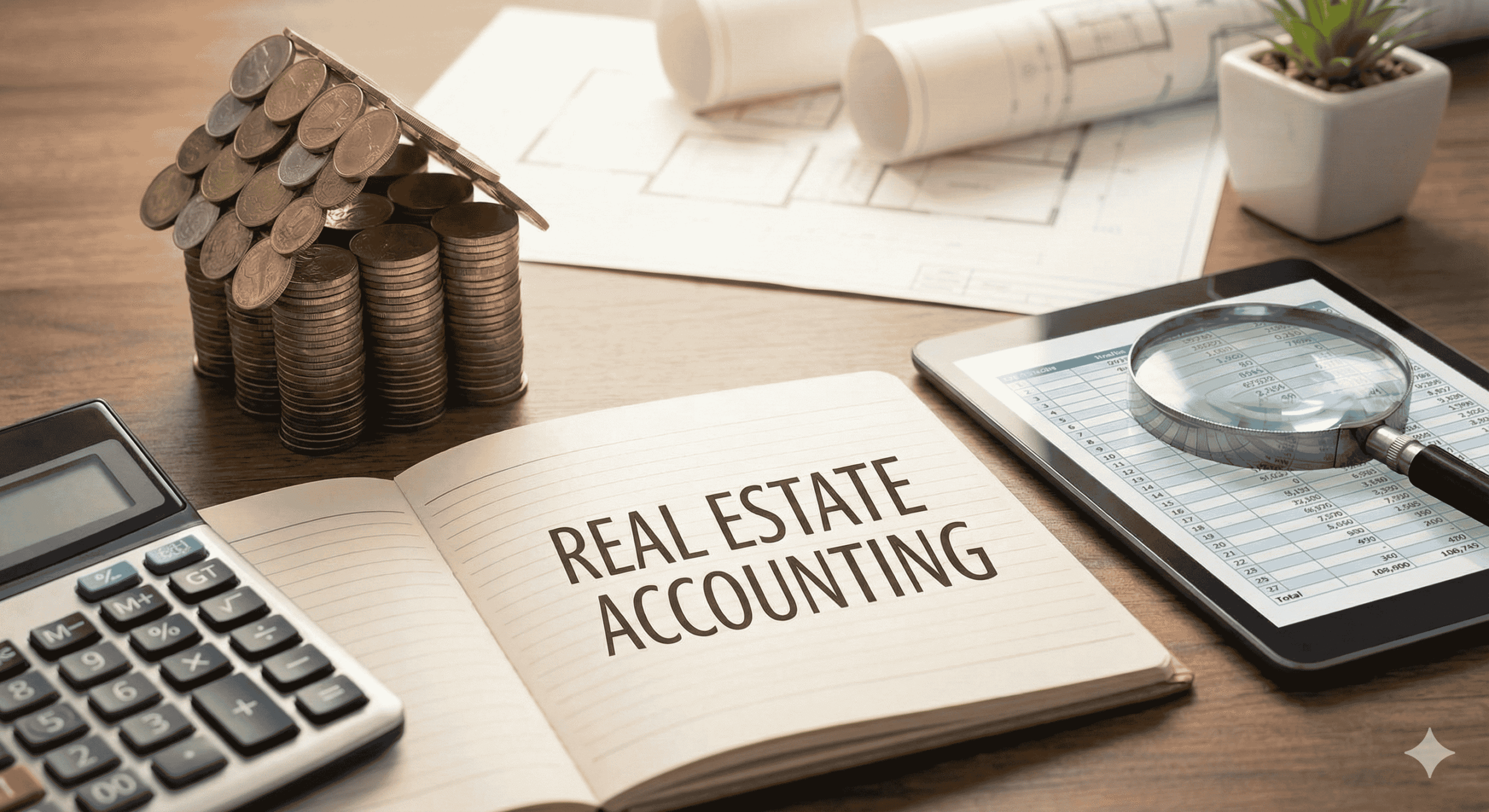
At Elite Solutions, we provide professional accounting solutions designed to help businesses, investors, and property owners maintain accurate financial records, improve financial visibility, and make smarter decisions.
Whether you own rental properties, manage commercial buildings, or invest in real estate, understanding the difference between real estate accounting and general accounting can help you choose the right financial support.
What Is General Accounting?
General accounting focuses on recording, organizing, and reporting financial transactions for businesses across different industries.
Common general accounting services include:
- Bookkeeping and transaction recording
- Accounts payable and accounts receivable management
- Bank reconciliations
- Financial statement preparation
- Payroll accounting
- Tax preparation support
- Cash flow tracking
For many businesses, general accounting provides the information needed to understand profitability, manage expenses, and maintain compliance.
However, industries with specialized financial structures require additional expertise.
What Is Real Estate Accounting?
Real estate accounting is a specialized area of accounting focused on managing financial activities related to properties, investments, and real estate operations.
Unlike traditional businesses, real estate involves unique financial factors such as property acquisitions, rental income, depreciation, financing, and long-term asset management.
Real estate accounting includes:
- Property income and expense tracking
- Rental revenue management
- Asset depreciation calculations
- Mortgage and loan tracking
- Property investment reporting
- Tax planning support
- Financial analysis for investors
At Elite Solutions, we help real estate professionals maintain organized financial records so they can focus on growing their investments.
Key Differences Between Real Estate Accounting and General Accounting
-
Property and Asset Tracking
One of the biggest differences between general accounting and real estate accounting is asset management.
Traditional businesses usually track operational expenses, inventory, and equipment. Real estate investors must carefully monitor valuable properties that can appreciate over time.
Real estate accounting helps track:
- Property purchase costs
- Renovation expenses
- Maintenance costs
- Improvements
- Depreciation schedules
- Investment performance
Accurate tracking provides investors with a clear picture of each property’s financial health.
-
Property Management Accounting
Managing rental properties involves many financial details that require specialized reporting.
Property management accounting helps property owners monitor:
- Rent collections
- Tenant payments
- Maintenance expenses
- Insurance costs
- Property taxes
- Utility expenses
- Management fees
With proper accounting systems, property owners can better control expenses and improve profitability.
-
Tax Planning and Compliance
Real estate investments often come with unique tax considerations. Proper accounting helps organize records and identify potential deductions while maintaining compliance.
Real estate accounting supports:
- Depreciation tracking
- Expense categorization
- Investment reporting
- Tax preparation
- Capital improvement records
Elite Solutions works with businesses and investors to create accurate financial records that support better tax planning.
-
Accounting for Real Estate Investors
Real estate investors need detailed financial insights beyond basic bookkeeping.
Accounting for real estate investors may include:
- Property-specific profit and loss reports
- Cash flow analysis
- Investment performance tracking
- Expense forecasting
- Portfolio reporting
These reports help investors evaluate opportunities and make informed decisions about buying, selling, or expanding their portfolios.
Why Real Estate Businesses Need Specialized Accounting
Managing real estate finances without proper accounting expertise can lead to inaccurate reporting, missed deductions, and poor financial decisions.
A specialized accounting approach helps real estate professionals:
- Understand true property profitability
- Maintain organized records
- Improve cash flow management
- Prepare accurate financial reports
- Plan for long-term growth
At Elite Solutions, our experienced team provides customized accounting services based on each client’s unique needs.
Commercial Real Estate Accounting: Managing Complex Investments
Commercial real estate involves larger transactions, multiple properties, and complex financial reporting requirements.
Commercial real estate accounting can include:
- Multi-property accounting
- Lease and tenant financial tracking
- Operating expense analysis
- Capital investment reporting
- Financial forecasting
Accurate accounting allows commercial property owners and investors to make strategic decisions with confidence.
Why Choose Elite Solutions?
At Elite Solutions, we understand that every business requires more than basic numbers — it needs financial clarity and strategic support.
Our accounting services help clients:
- Keep accurate financial records
- Improve business decision-making
- Manage complex transactions
- Stay organized for tax season
- Build a stronger financial future
Whether you need general accounting support or specialized real estate accounting services, Elite Solutions provides reliable solutions tailored to your goals.
Conclusion
General accounting provides essential financial management for businesses, but real estate accounting requires specialized knowledge of property investments, rental operations, and financial reporting.
For property owners, investors, and real estate businesses, partnering with an experienced accounting firm like Elite Solutions can provide the accuracy, insight, and support needed for long-term success.
Contact Elite Solutions today to learn how professional accounting services can help your business grow.