

Technological advancements are also transforming how companies operate, communicate with consumers, and make key decisions. Organizations have now moved beyond utilizing conventional systems to conduct day-to-day business activities. Rather, they use connected technologies to get real-time information to enhance efficiencies and conduct better operations. The main force driving the changes is the Internet of Things (IoT).
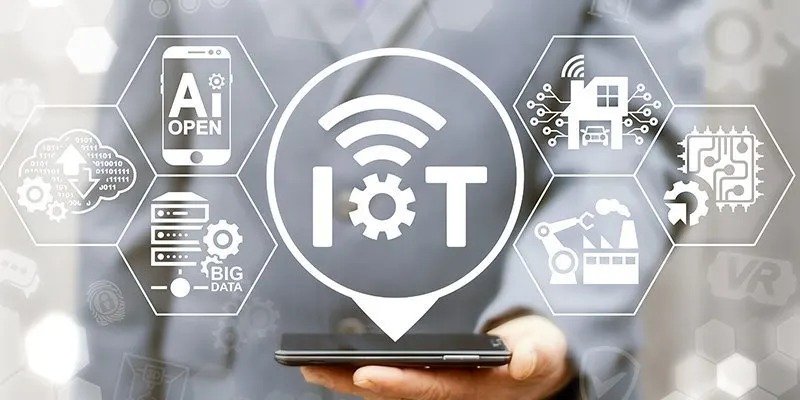
IoT is a network of devices connected to the Internet to gather, exchange, and process data. This includes devices such as smart sensors, cameras, industrial machines, tracking systems, connected appliances, and so forth. With the help of IoT, businesses can monitor their operations, detect issues, and make better decisions based on available information.
Knowing how IoT is helping smart businesses will enable businesses to discover new ways through which to boost efficiencies and cut down costs.
1. Enhancing Operational Efficiencies
To run a thriving business enterprise, there has to be proper coordination among people, machinery, and activities in an organization. IoT makes this simple through connectivity of various machines that share information among themselves automatically.
For instance, sensor-enabled machines can help businesses track performance, temperatures, and other aspects. The manager will be able to have the data via connected dashboards without having to conduct physical inspections. In case of anything out of the ordinary, alerts will be triggered.
In addition, retail establishments will be able to track product inventory, logistics, and storage through connected devices. The technology helps automate the process thus giving people an opportunity to attend to other things.
From this, it is clear that some of the key Benefits of IoT in Business include simplifying processes and optimizing resource utilization.
2. Making Better Decisions with Data
Good business decision making depends on accurate and relevant data being provided at the right time. However, traditional reporting may at times pose challenges since information has to be organized and analyzed.
IoT devices offer a solution since the technology enables the constant collection of data on operations, equipment performance, customer interactions, and many others.
For example, a logistics firm can track the location and progress of deliveries through GPS trackers. The manager can detect traffic congestion, optimize delivery routes, and inform customers about their deliveries.
In the same way, a retail firm can use data from connected devices to analyze the movement of customers within the store and optimize its layout.
With the combination of data and analytics, the firm can detect patterns and possible problems and make decisions based on actual performance.
3. Cost Savings through Predictive Maintenance
Unexpected malfunctions of equipment can cause interruptions of production, delay of orders, and require costly maintenance services. For businesses that rely on machines or technical equipment, even a small amount of downtime can reduce their efficiency.
IoT makes it possible to perform predictive maintenance with the help of sensors. The sensors collect information about vibration, temperature, pressure, and operating time. Analytics systems can detect abnormal patterns that can show upcoming malfunctions.
Rather than waiting until the equipment stops working, maintenance workers can find the warning signs and perform maintenance when it is needed.
For example, a manufacturer can track the condition of industrial equipment and be informed when there are changes in its performance.
This will ensure that any unnecessary distractions are avoided and that the lifespan of the machinery is increased. Predictive maintenance will enable companies to plan their maintenance activities based on the condition of the machinery.
4. Creating More Personalized Customer Experiences
The needs of consumers have been changing over time. Convenience, fast service, recommendations, and communication have become important to them. With IoT, there are more opportunities for organizations to get an insight into consumer needs and offer better services.
Smart retail stores can take advantage of IoT-enabled inventory systems to provide correct information on the availability of products. IoT will enable smart home organizations to design products that will enable consumers to remotely manage their lighting systems, security systems, and even kitchen appliances.
IoT will help hotels in the hospitality industry to manage room temperatures and lighting, among other consumer needs. In addition, businesses can integrate data from IoT with CRM to know their needs and communicate better. However, it is necessary to collect data about customers responsibly.
A more personalized experience can help build customer satisfaction and loyalty.
5. Enhancing Supply Chain Management
The processes included in supply chain management are purchases, storing, transporting, and delivering. In order to manage these processes efficiently, it is necessary to have access to precise data regarding them. Otherwise, a company will face such problems as delays of deliveries, insufficient inventory, and inefficient distributions.
By using IoT technologies, organizations will be able to enhance the process of managing the processes listed above. With the help of GPS trackers, companies will be able to keep track of their deliveries, while smart sensors will provide the data about storage conditions (temperature, humidity, etc.).
It is especially relevant for businesses dealing with food, medications, and other goods requiring certain conditions. Unexpected changes in storage conditions will be detected by connected sensors allowing workers to notify workers in time to act.
Using sensors and tracking systems, companies will be able to control stock movements and improve their accuracy.
6. Enhancing Workplace Safety and Security
For creating a productive working environment, not only employees need to be protected but equipment, data, and customers too. This can be achieved by means of using such technologies as cameras, environmental sensors, connected access control system, wearables, etc.
In the workplace, sensors worn on the body may be useful in monitoring environmental conditions and informing people of any threats present. Connected smoke alarms and air quality sensors will be able to detect hazardous situations before they become serious.
Connected security systems may also track restricted areas and alert authorized individuals of any unusual activity.
Nevertheless, it is vital to approach the implementation of all these systems in a cautious way. The issues of device security, software updates, access permissions, and data protection policies must be solved in order to minimize the risk of cyber attacks.
Preparing Your Company for IoT
There are many benefits of IoT. Nevertheless, in order to take advantage of them, one has to do much more than just purchase smart devices. It is important to figure out what problems the company wants to solve and what solutions connected technologies could provide.
The issues of installation cost, compatibility, internet connectivity, data management, cybersecurity, and employee training must be addressed in the process. Elite Solutions USA will help your business find digital solutions, increase its online visibility, and build a solid technology infrastructure with the help of such services as web development, SEO, digital marketing, and business support.
Building a Smarter Future
IoT is revolutionizing the way of doing business by connecting devices, increasing information accessibility, and making decisions more efficient. Starting from predictive maintenance, supply chain transparency, and ending with work safety and individualized customer experience, the possibilities of IoT application are continuously growing.
Knowledge of the Benefits of IoT in Business gives companies opportunities to find out how to make their business more efficient and provide better services. Smart companies that consider IoT can develop smarter, connected, and more adaptive operations.
With the development of technology, smart companies will be the ones who use connected solutions wisely, secure their data, and make valuable decisions based on useful information.