



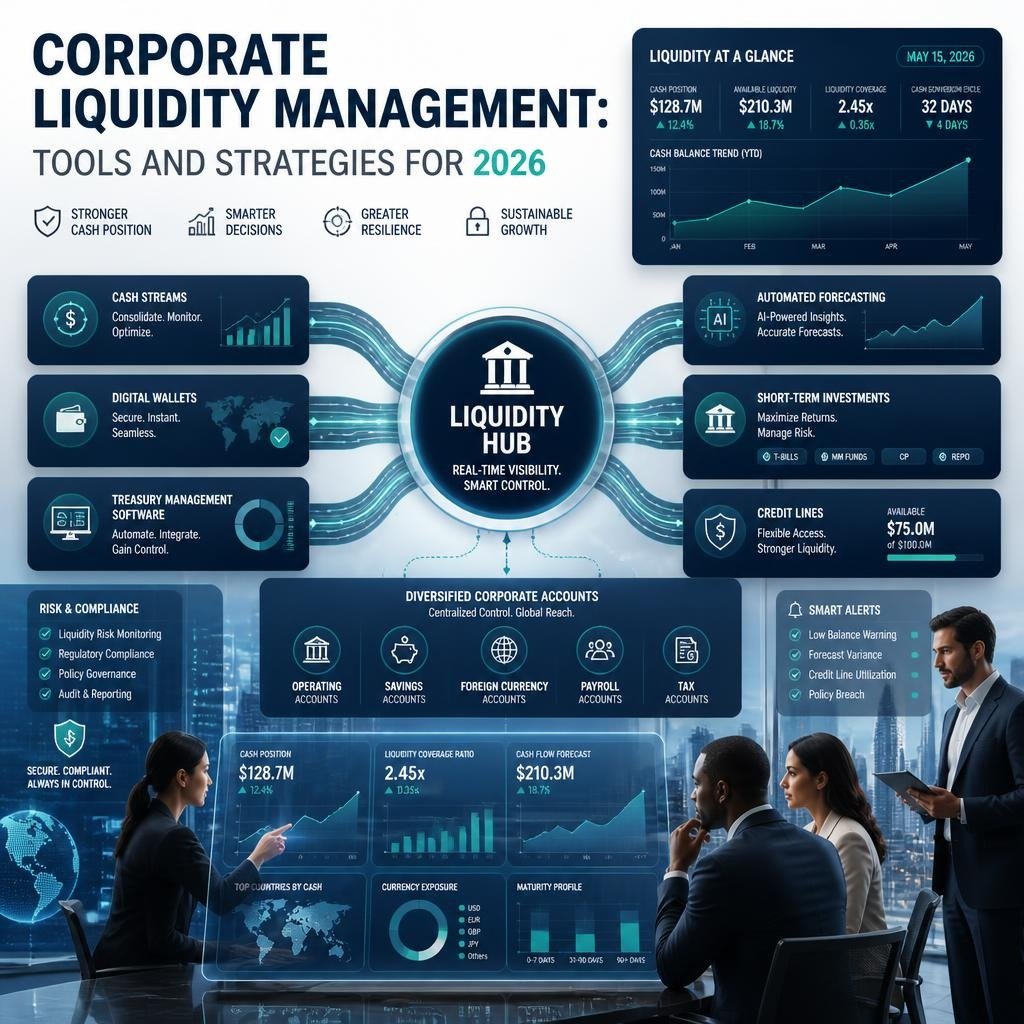
Introduction: Why Corporate Liquidity Management Matters in 2026
In today’s rapidly changing business environment, maintaining healthy cash flow is essential for sustainable growth. Businesses must manage operating expenses, meet financial obligations, invest in opportunities, and prepare for unexpected market changes. Without effective liquidity planning, even profitable companies can experience cash shortages that disrupt daily operations.
Corporate liquidity management helps businesses maintain sufficient cash and accessible funds to meet short-term obligations while making the most of available financial resources.
In 2026, businesses can strengthen their financial position by combining accurate cash flow forecasting, working capital optimization, automation, and data-driven financial planning.
At Elite Solutions, we help businesses understand the importance of effective financial management and strategic planning to support operational efficiency, financial stability, and long-term growth.
What Is Corporate Liquidity Management?
Corporate liquidity management is the process of monitoring, planning, and controlling a company’s cash and other liquid assets to ensure it can meet its financial commitments when they become due.
It involves balancing cash availability with business expenses, outstanding receivables, supplier payments, debt obligations, and investment requirements.
Effective liquidity management helps businesses answer three important questions:
• How much cash is currently available?
• How much cash will the business need in the coming weeks and months?
• How can the company improve cash availability without compromising growth?
By answering these questions, financial leaders can make informed decisions, reduce liquidity risks, and allocate resources more efficiently.
Why Liquidity Management Is a Priority for CFOs in 2026
Chief Financial Officers (CFOs) face increasing pressure to maintain financial stability while supporting business expansion. Changes in interest rates, operating costs, customer payment behavior, and supply chains can make cash flow less predictable.
A strong liquidity management strategy enables CFOs to anticipate financial challenges instead of reacting to them after they occur.
Key benefits include:
Improved financial visibility: Real-time or frequently updated cash positions help decision-makers understand available resources.
Better cash flow predictability: Forecasting helps businesses anticipate periods of cash surpluses or shortages.
Reduced financial risk: Maintaining appropriate liquidity buffers helps companies prepare for unexpected expenses and delayed customer payments.
More efficient working capital: Better management of receivables, payables, and inventory can free up cash for essential operations.
Stronger strategic planning: Reliable liquidity information supports decisions about hiring, expansion, equipment purchases, and investment.
1. Cash Flow Forecasting and Planning
Cash flow forecasting is one of the most important tools for corporate liquidity management. It estimates future cash inflows and outflows over a defined period, allowing businesses to prepare for upcoming financial commitments.
An effective forecast should account for customer payments, payroll, rent, supplier invoices, taxes, loan repayments, capital expenditures, and other significant transactions.
Best practices for cash flow forecasting
• Maintain rolling forecasts that are updated regularly.
• Compare projected cash flows with actual results.
• Identify seasonal patterns in revenue and expenses.
• Develop best-case, expected-case, and worst-case scenarios.
• Coordinate forecasting with sales, operations, procurement, and accounting teams.
In 2026, businesses can also use financial dashboards and forecasting software to consolidate data and identify potential cash shortages earlier.
2. Working Capital Optimization
Working capital management plays a critical role in maintaining liquidity. A company may report strong revenue and profits but still struggle to pay its bills if too much cash is tied up in unpaid invoices or inventory.
Working capital generally reflects the difference between current assets and current liabilities.
Businesses can improve working capital through three key areas.
Accounts receivable management
Late customer payments can create unnecessary pressure on cash flow. Companies should establish clear payment terms, issue invoices promptly, monitor overdue balances, and follow up consistently.
Automated reminders and digital payment options can help reduce collection delays.
Accounts payable management
Managing supplier payments strategically can help businesses preserve cash without damaging supplier relationships.
Companies should review payment terms, prioritize essential obligations, and take advantage of negotiated terms when appropriate. However, delaying payments beyond agreed terms can create additional costs and operational risks.
Inventory management
Excess inventory ties up cash that could otherwise support operations or growth.
Businesses should monitor inventory turnover, improve demand forecasting, and align purchasing decisions with realistic sales expectations.
Together, these measures can improve liquidity and strengthen overall financial efficiency.
3. Corporate Liquidity Management Solutions and Technology
Technology is transforming how businesses monitor and manage cash. Modern corporate liquidity management solutions can help finance teams consolidate financial information, automate routine processes, and improve visibility across accounts.
Depending on the business’s size and requirements, useful tools may include:
• Treasury management systems: Support cash positioning, liquidity forecasting, and treasury operations.
• Cash flow forecasting software: Helps estimate future cash requirements using historical and projected data.
• Accounting and ERP platforms: Connect financial transactions, payables, receivables, and reporting.
• Banking dashboards: Provide visibility into balances and transactions across supported accounts.
• Business intelligence tools: Help analyze trends, identify variances, and support financial decision-making.
When evaluating technology, businesses should consider integration capabilities, data accuracy, cybersecurity, reporting needs, scalability, and total cost of ownership.
Automation can improve efficiency, but reliable results still depend on accurate data, sound financial controls, and appropriate human oversight.
4. Liquidity Risk Management and Scenario Planning
Unexpected events can affect even well-managed businesses. Delayed customer payments, rising expenses, supply chain disruptions, or sudden changes in demand may reduce available cash.
Liquidity risk management helps businesses identify these vulnerabilities and prepare appropriate responses.
A practical risk management framework should include:
Cash reserves: Establish a suitable liquidity buffer based on operating expenses, revenue volatility, and access to financing.
Scenario analysis: Model how changes in sales, costs, customer payments, or borrowing conditions could affect cash balances.
Contingency planning: Identify possible responses to a cash shortage, such as adjusting discretionary spending, accelerating collections, or arranging appropriate financing.
Liquidity monitoring: Establish internal thresholds and reporting procedures to flag potential shortfalls.
Funding diversification: Where appropriate, avoid relying excessively on a single source of short-term financing.
The objective is not simply to hold as much cash as possible. It is to maintain an appropriate balance between financial security and productive use of capital.
5. Key Liquidity Metrics Every CFO Should Monitor
Financial metrics help CFOs assess liquidity conditions and identify areas requiring attention.
| Metric | What It Measures | Why It Matters |
| Current ratio | Current assets divided by current liabilities | Indicates the company’s ability to cover short-term obligations using current assets |
| Quick ratio | Liquid current assets divided by current liabilities | Assesses short-term coverage without relying on inventory sales |
| Operating cash flow | Cash generated or used by core business operations | Shows whether ordinary operations generate sufficient cash |
| Cash conversion cycle | Time required to convert inventory and other operating investments into cash | Helps identify opportunities to release working capital |
| Cash runway | Estimated period available cash can support net cash outflows | Helps businesses plan for periods of financial pressure |
These metrics should be interpreted in context. Appropriate levels vary by industry, business model, seasonality, and access to financing.
For example, a retailer with rapid inventory turnover may have different liquidity requirements from a professional services firm with low inventory and longer customer payment cycles.
6. Building a Corporate Liquidity Strategy for 2026
An effective liquidity strategy combines financial visibility, disciplined processes, and regular review.
Businesses can strengthen their approach through the following steps:
Step 1: Assess the current cash position
Review bank balances, expected receipts, upcoming payments, credit facilities, and restricted cash.
Step 2: Develop a rolling cash flow forecast
Project cash inflows and outflows over a period appropriate to the business. Many organizations benefit from a short-term weekly forecast alongside a longer-term monthly outlook.
Step 3: Identify working capital opportunities
Analyze receivable aging, supplier terms, inventory levels, and recurring operating costs to determine where cash can be released.
Step 4: Establish liquidity targets
Define appropriate minimum cash levels and escalation procedures based on business needs and risk tolerance.
Step 5: Use integrated financial tools
Connect accounting, banking, and reporting systems where practical to reduce manual work and improve consistency.
Step 6: Review performance regularly
Compare forecasts with actual results, investigate variances, and adjust plans as business conditions change.
This process turns liquidity management into an ongoing business discipline rather than an occasional financial exercise.
7. Common Corporate Liquidity Management Mistakes
Even established companies can face cash flow problems when financial planning does not keep pace with operational growth.
Common mistakes include:
• Relying exclusively on historical financial statements rather than future cash forecasts.
• Treating accounting profit as equivalent to available cash.
• Ignoring overdue receivables and slow-paying customers.
• Holding excessive inventory without reviewing demand.
• Making major investments without assessing their cash flow impact.
• Depending too heavily on short-term borrowing.
• Failing to update forecasts when business conditions change.
Avoiding these mistakes requires consistent monitoring, cross-functional collaboration, and a clear understanding of how everyday business decisions affect liquidity.
How Elite Solutions Can Support Your Business
Effective corporate liquidity management requires more than monitoring bank balances. It requires a clear understanding of cash flow, financial reporting, working capital, and future business commitments.
Elite Solutions supports businesses with financial and business-focused solutions designed to improve operational visibility, strengthen planning, and support informed decision-making.
Our approach emphasizes the importance of:
• Improving financial reporting and cash flow visibility.
• Supporting budgeting, forecasting, and variance analysis.
• Identifying opportunities to improve working capital efficiency.
• Using appropriate digital tools to streamline financial processes.
• Building more structured financial planning practices.
Every business has different liquidity requirements. A growing small business may need better receivables management and short-term forecasting, while a larger organization may benefit from more integrated treasury processes and consolidated cash reporting.
By aligning financial processes with business objectives, companies can make better use of available resources and prepare more confidently for future opportunities.
Conclusion: Make Liquidity a Strategic Advantage
Corporate liquidity management is a fundamental part of financial stability and sustainable business growth in 2026.
Businesses that forecast cash flow effectively, optimize working capital, monitor key financial metrics, and adopt appropriate technology can improve their ability to meet obligations and respond to unexpected challenges.
For CFOs and business leaders, the priority is to build a proactive liquidity strategy that balances financial resilience with investment and growth.
With disciplined financial planning and the right processes, liquidity management can become more than a risk-control function. It can help businesses make smarter decisions, allocate capital more effectively, and pursue opportunities with greater confidence.
Elite Solutions — Helping Businesses Build Stronger Financial Foundations for Sustainable Growth.
Frequently Asked Questions (FAQs)
1. What is corporate liquidity management?
Corporate liquidity management is the process of managing cash and liquid assets to ensure a business can meet its short-term financial obligations while supporting ongoing operations and growth.
2. What are the best strategies to manage corporate liquidity?
Key strategies include cash flow forecasting, working capital optimization, timely receivables collection, effective payables management, maintaining suitable cash reserves, and regularly monitoring liquidity metrics.
3. Which tools help businesses manage liquidity in 2026?
Businesses may use accounting platforms, ERP systems, treasury management software, cash flow forecasting tools, banking dashboards, and business intelligence solutions.
4. Why is working capital important for liquidity?
Working capital affects how efficiently a business manages its short-term assets and liabilities.
Improving receivables, payables, and inventory processes can help release cash and reduce financial pressure.
5. How often should a business review its liquidity position?
The frequency depends on the company’s size, cash flow volatility, and financial risk. Businesses with tight or unpredictable cash flows may need daily cash monitoring and weekly forecasts, while more stable organizations may use less frequent reviews alongside regular reporting.
6. How can Elite Solutions help businesses improve financial management?
Elite Solutions can support businesses through financial planning, reporting, budgeting, forecasting, and process improvement solutions aligned with their operational needs.