

The way businesses build and manage websites is changing rapidly. Modern websites need to be fast, flexible, mobile-friendly, and capable of delivering content across multiple platforms. Traditional content management systems can still work well, but developers and businesses are increasingly exploring a more flexible approach: headless CMS.
A headless CMS separates the content management system from the website’s presentation layer. This allows developers to create customized digital experiences while content teams can continue managing content through a centralized platform.
But what exactly makes headless CMS technology different, and why are more businesses considering it?
What Is a Headless CMS?
A traditional CMS typically combines two major functions: managing website content and displaying that content to visitors.
A headless CMS separates these functions.
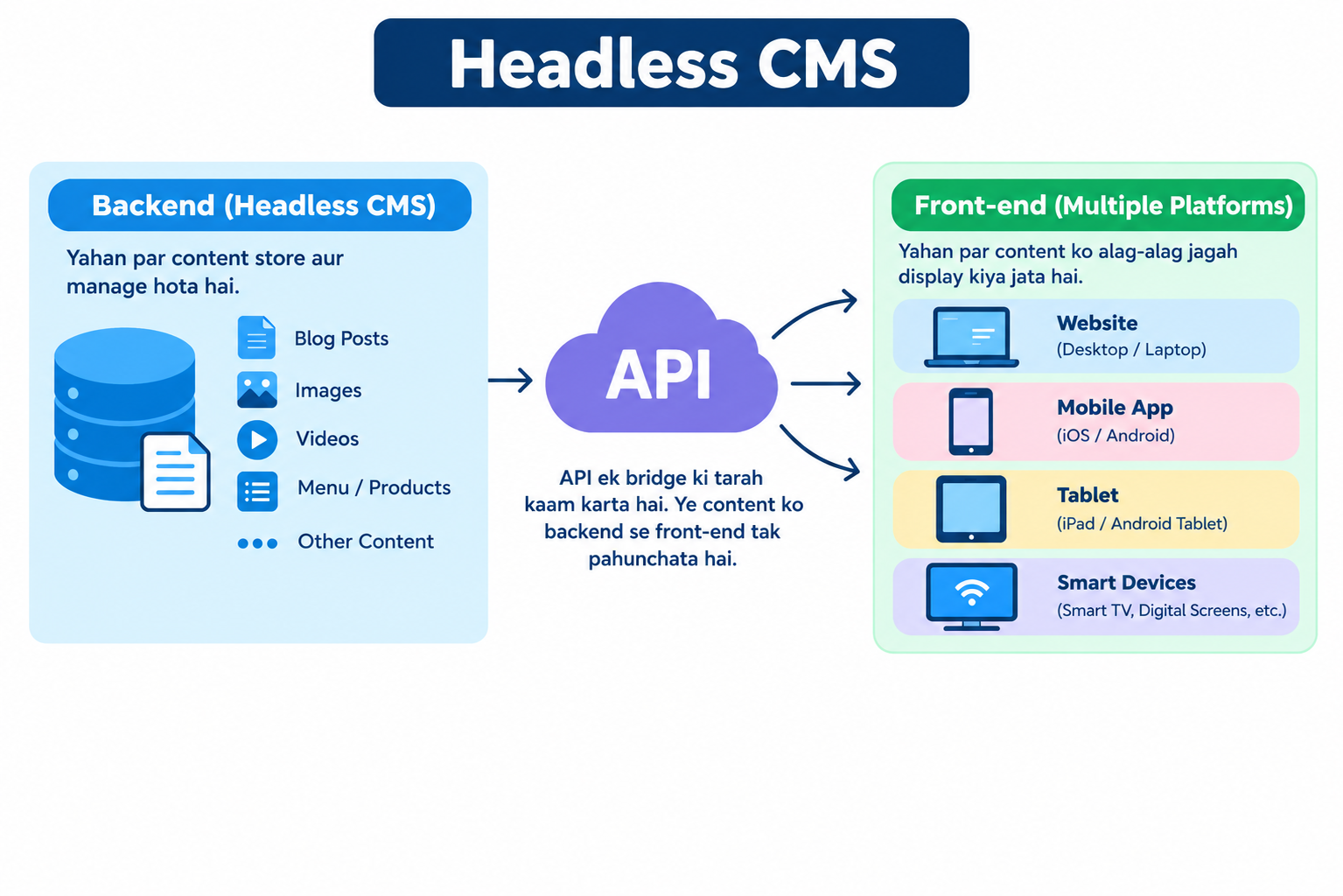
The CMS acts as the backend where content is created, organized, and stored. Developers then use APIs to deliver that content to websites, mobile applications, ecommerce platforms, digital displays, and other digital experiences.
In simple terms:
Traditional CMS: Content management + website presentation are connected.
Headless CMS: Content management and website presentation are separated.
This separation gives development teams significantly more freedom when designing digital experiences.
Headless CMS vs. Traditional CMS
One of the biggest differences between a headless CMS and a traditional CMS is flexibility.
Traditional CMS platforms often provide ready-made themes, templates, plugins, and page-building tools. This can make launching a standard website relatively straightforward.
With a headless CMS, developers have greater control over the frontend technology and architecture.
They can choose frameworks, tools, and technologies based on the project’s specific requirements rather than being tied closely to the CMS’s presentation layer.
This approach can be particularly useful for businesses that need customized websites or want to publish the same content across multiple platforms.
Key Headless CMS Benefits
1. Greater Development Flexibility
One of the biggest headless CMS benefits is frontend freedom.
Developers can use modern frameworks and technologies to create customized experiences while the CMS handles content management separately.
This can make it easier to build unique websites rather than relying heavily on predefined themes.
2. Content for Multiple Platforms
Businesses increasingly publish content beyond traditional websites.
The same product information, articles, images, or other content may need to appear on:
- Websites
- Mobile apps
- Ecommerce platforms
- Digital displays
- Customer portals
- Other digital interfaces
Because a headless CMS uses APIs to deliver content, the same centralized content can potentially support multiple digital channels.
3. Improved Scalability
As a business grows, its digital requirements can become more complex.
A decoupled architecture allows teams to develop the frontend and content infrastructure independently.
This separation can make it easier to introduce new digital experiences without rebuilding the entire content management system.
4. Better Developer Experience
For headless CMS for developers, one major advantage is the ability to work with familiar frontend technologies.
Instead of being restricted to a CMS-specific templating system, developers can select tools and frameworks that suit the project.
This can be especially valuable for development teams already working with modern JavaScript frameworks and API-driven architectures.
How Does Headless CMS Affect Performance?
Headless CMS performance depends on the overall architecture—not simply on choosing a headless platform.
A well-designed headless website can benefit from modern frontend techniques such as static generation, caching, content delivery networks, image optimization, and efficient API usage.
However, simply switching to a headless CMS does not automatically make a website faster.
Performance still depends on factors such as:
- Hosting infrastructure
- API response times
- Image sizes
- JavaScript usage
- Caching strategy
- Frontend framework
- Content delivery
- Website architecture
Developers should therefore evaluate the complete system when planning a high-performance website.
Is Headless CMS Right for Every Business?
Not necessarily.
A traditional CMS may still be an excellent choice for smaller websites, blogs, and businesses that want a straightforward setup with minimal development complexity.
A headless CMS can be particularly useful when a business needs:
- Highly customized frontend experiences
- Multiple content delivery channels
- Greater development flexibility
- Scalable digital architecture
- Modern web application functionality
The right solution depends on the organization’s goals, technical requirements, budget, and long-term plans.
The Future of Web Development
The web is becoming increasingly connected, with businesses delivering content across websites, apps, ecommerce platforms, and emerging digital channels.
Headless CMS architecture gives development teams the flexibility to adapt to this changing environment. By separating content from presentation, businesses can create digital experiences that are easier to customize and potentially easier to expand over time.
For businesses considering a website redesign or new digital platform, understanding headless CMS vs. traditional CMS can help inform the technology decisions behind the project.
Build a More Flexible Digital Experience with Elite Solutions
At Elite Solutions, we understand that every business has different digital requirements. From website development and digital solutions to customized online experiences, choosing the right technology is an important part of building a website that can grow with your business.
Whether you’re exploring a traditional CMS or considering a headless architecture, our team can help you evaluate your requirements and develop a solution around your business goals.
Ready to explore what’s possible for your next website? Talk to Elite Solutions about your web development needs.